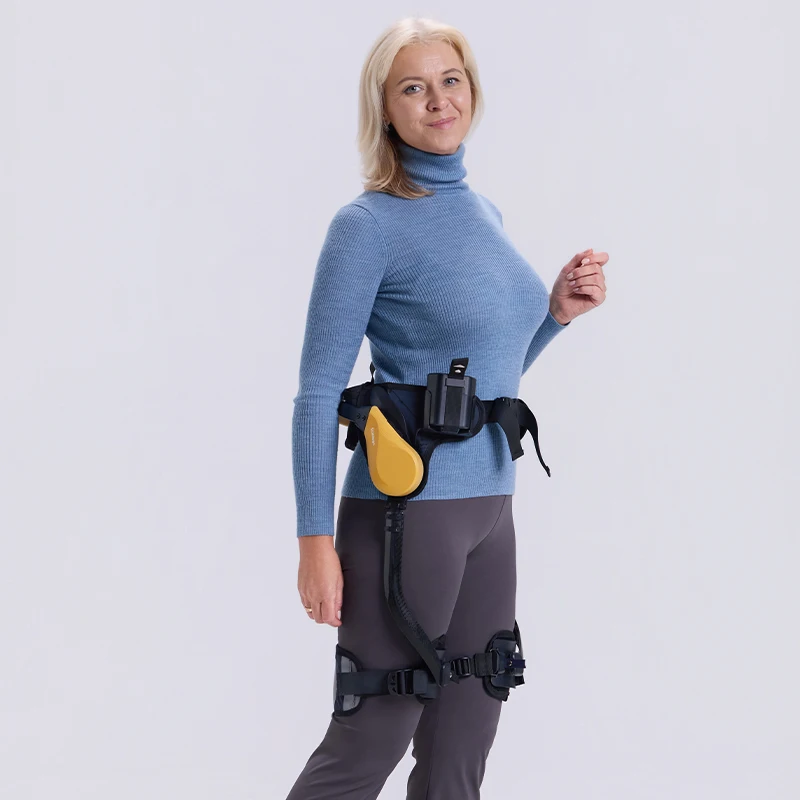
6-speed terrain Exoskeleton adaptation soft composite material safe external motor CE certified reduces fall risk effectively. Lightweight portable easy to clean. Check full features and contact us now.
Product Name |
Lightweight AI exoskeleton-assisted robot |
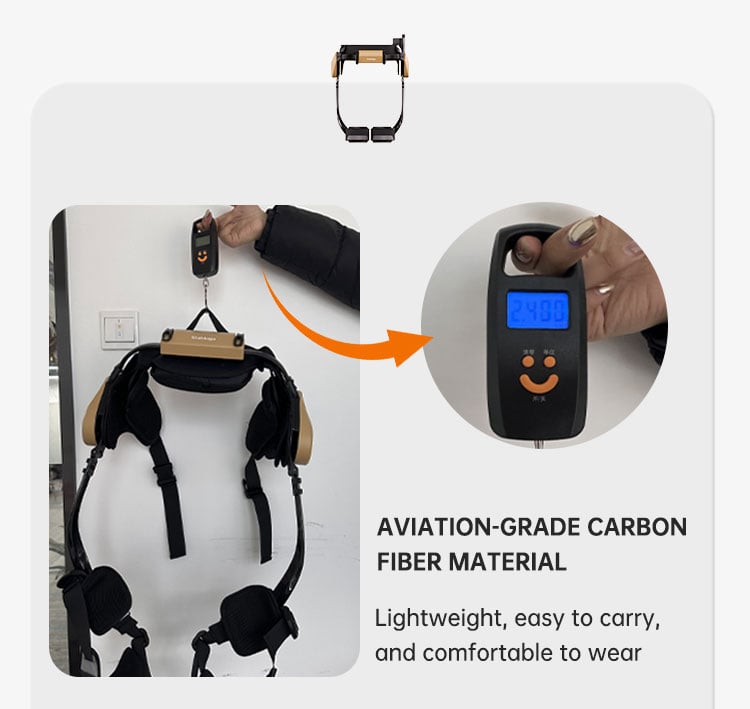
Weight |
2.4kg |
Temperature |
-10 °C ~ 45 °C |
Charging time |
Two hours |



Stablego’s Intelligent 6 Adjustment Modes Exoskeleton Robots bring practical and dependable mobility support to elderly users who want safer, more confident movement every day. Designed with clear goals—comfort, adaptability, and real-time response—this exoskeleton combines thoughtful engineering with straightforward operation. It helps seniors stand up, sit down, walk, and climb stairs with reduced effort and fewer risks of imbalance. The product looks approachable and works quietly, so it fits into home life without drawing attention.
At the core of Stablego is a versatile control system that offers six adjustment modes. Each mode is tuned to different activity levels and user needs. The modes include gentle assistance for light support, active gait support for steady walking, stair-assist for climbing, sit-to-stand aid, standing balance stabilization, and a manual mode for caregiver-led control. Switching modes is simple and quick. Users or caregivers can select the best setting in seconds, allowing the suit to match changing situations and conserve battery when full power is not needed.
Real-time movement adaptation is a standout feature. Sensors across the exoskeleton continuously monitor posture, joint angles, and movement intent. The system’s algorithms process these inputs instantly and adjust motor assistance in real time. This means the exoskeleton responds naturally to the user’s motion rather than imposing rigid patterns. If a user shifts weight unexpectedly, the device registers it and provides stabilizing support before a stumble becomes a fall. The immediate feedback loop improves safety and promotes confidence during daily tasks.
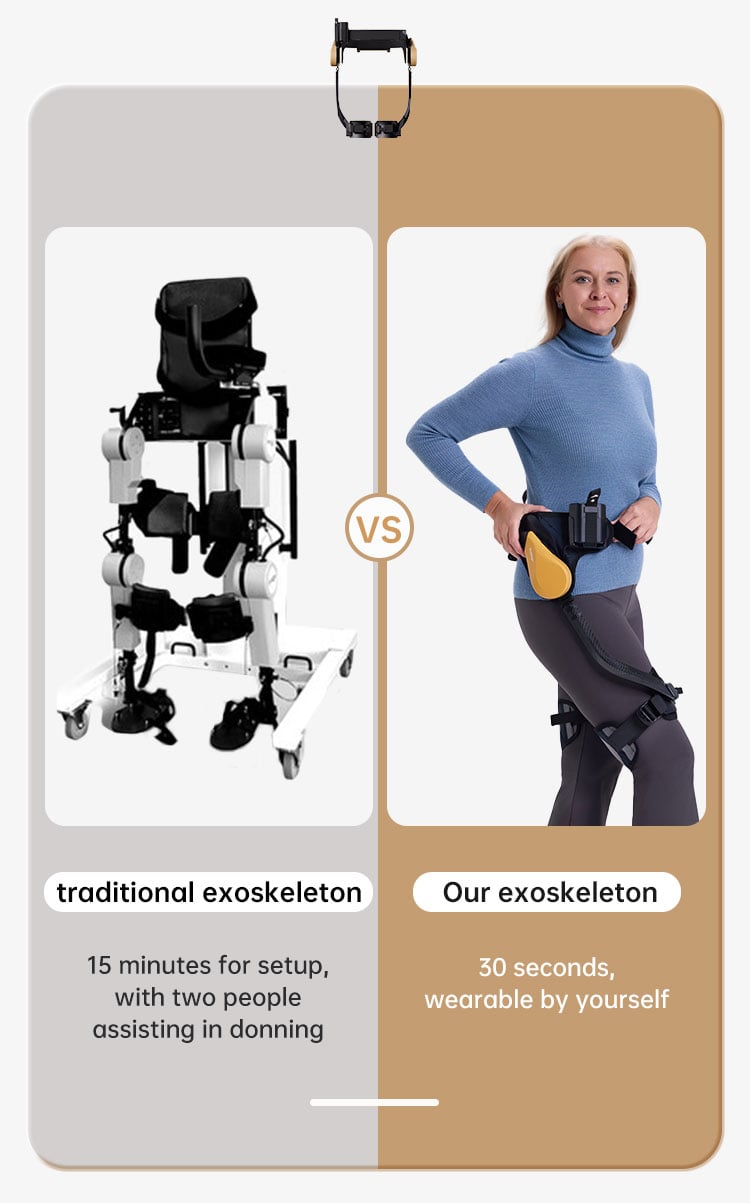
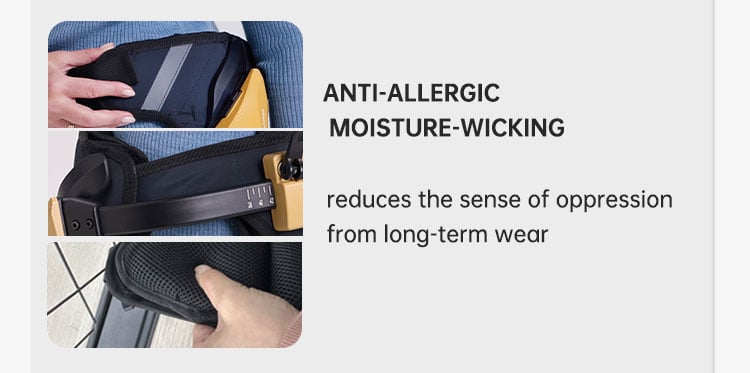
Comfort is a priority in Stablego’s design. Lightweight materials reduce strain, and padding sits where it matters most—around the hips, thighs, and lower back—minimizing pressure points. Adjustable straps and modular fittings let caregivers tailor fit for each person, ensuring the exoskeleton feels secure without being restrictive. Breathable fabrics help reduce heat buildup during extended use, and the joint alignments are matched to natural biomechanics, which lowers the effort required to move.
Ease of use is another deliberate focus. The interface is intuitive, featuring a clear display and straightforward controls for mode selection and power management. Voice prompts and simple LED indicators guide users through setup and show system status at a glance. For caregivers, a companion app provides additional control, movement logs, and helpful reminders for charging and maintenance. The app also allows remote mode selection and monitoring, giving family members or providers peace of mind when they can’t be present.
Safety is built in at multiple levels. The exoskeleton includes redundant sensors and emergency stop functions. If the system detects a fault or an unsafe condition, it transitions to a safe mode that either reduces assistance or locks joints in a stable position, depending on the situation. Mechanical stops prevent overextension of limbs, and the motors include torque limits to avoid applying excessive force. The shell and components are tested to meet durability standards appropriate for daily use, and the device undergoes routine software checks to ensure reliable operation.
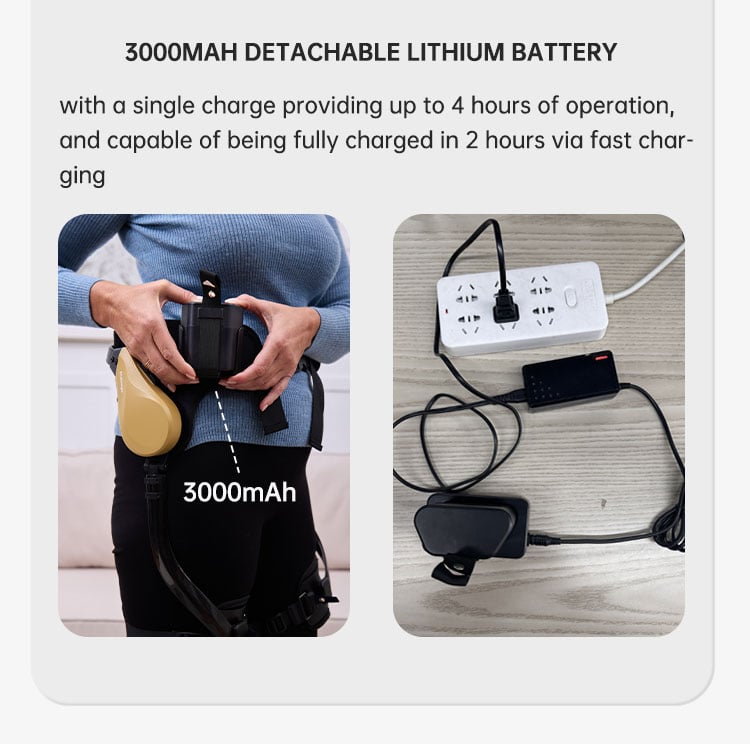
Battery life is engineered for typical daily routines. The power module is Swappable so caregivers can replace batteries quickly when longer usage is required. Charging is fast and straightforward; the base station doubles as a neat storage stand, making overnight charging easy and keeping the exoskeleton ready each morning. Efficient motor control and power management help extend run time, while the system displays remaining battery life clearly to avoid unexpected shutdowns.
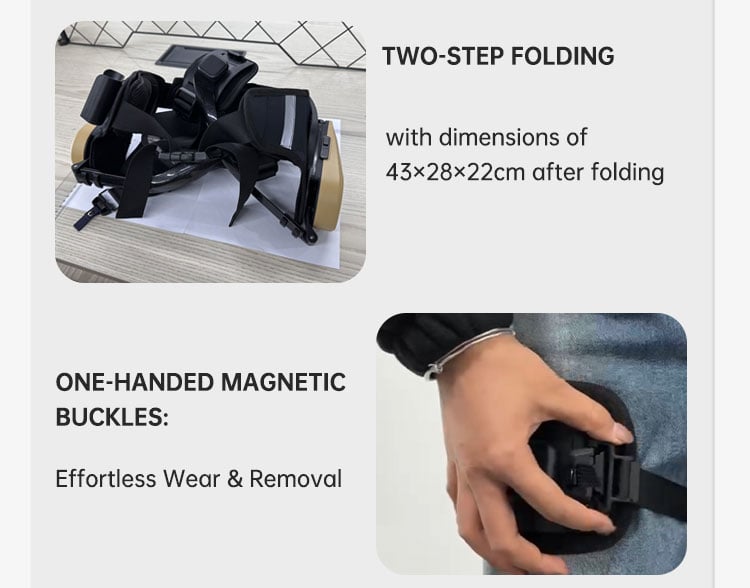
Training and support are integral parts of the Stablego experience. Each unit comes with guided setup materials that use plain language and step-by-step photos. Professional installation and initial training can be arranged, and the company provides access to tutorials for common tasks such as donning the suit, choosing modes, and performing basic maintenance. Customer service is available for technical questions, and firmware updates are delivered over the air to improve functionality and safety over time.
The exoskeleton also supports rehabilitation goals. Physical therapists can use the device to encourage correct walking patterns and gradual increases in activity. The six modes allow therapists to scale assistance up or down based on progress, making the system useful both for immediate support and for long-term mobility training. Movement logs and progress summaries help track improvements and tailor therapy plans.
Stablego’s aesthetic balances modern design with approachable looks. The device does not appear medicalized; it can be worn at home or in community spaces without feeling out of place. Color and accessory options let users personalize their device to some degree, which can help reduce any stigma about wearing assistive technology.
Durability and maintenance are practical. Components that contact the body are removable and easy to wash. Hinges and fasteners are accessible for routine checks, and the system flags maintenance needs through the app or interface. Spare parts and service plans are available to keep the device in working condition over years of use.
Stablego’s Intelligent 6 Adjustment Modes Exoskeleton Robots offer elderly users a balanced mix of safety, comfort, and responsive assistance. The six adjustment modes meet a wide range of daily activities, while real-time movement adaptation makes walking and standing feel more natural. Combined with a focus on ease of use, robust safety features, and support for rehabilitation, Stablego aims to restore independence and reduce caregiver burden. This exoskeleton helps seniors move with more confidence, maintain activity, and enjoy a better quality of life.
1. Stair Climbing & Steps
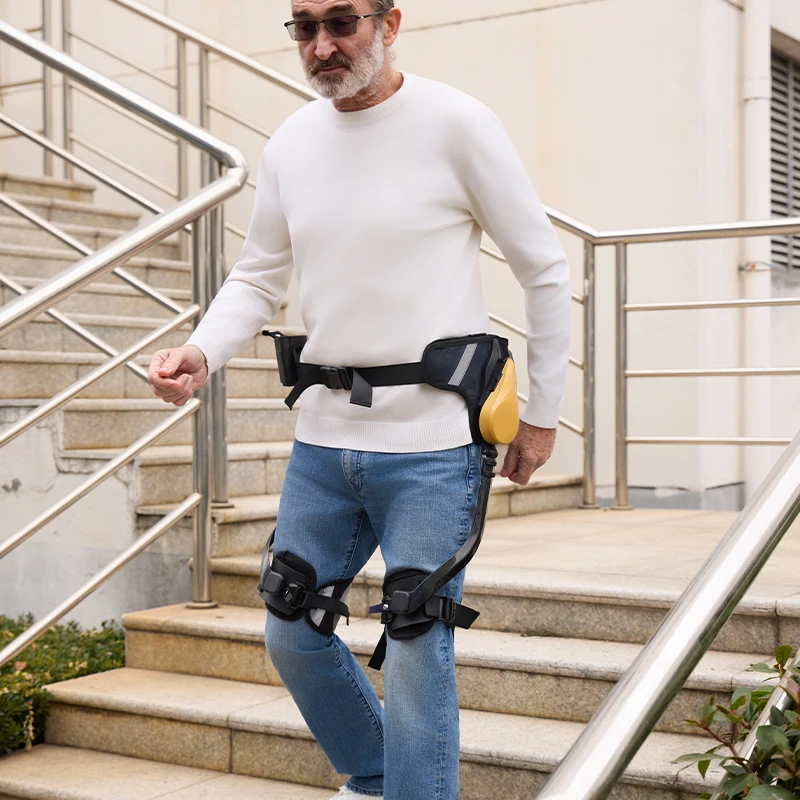
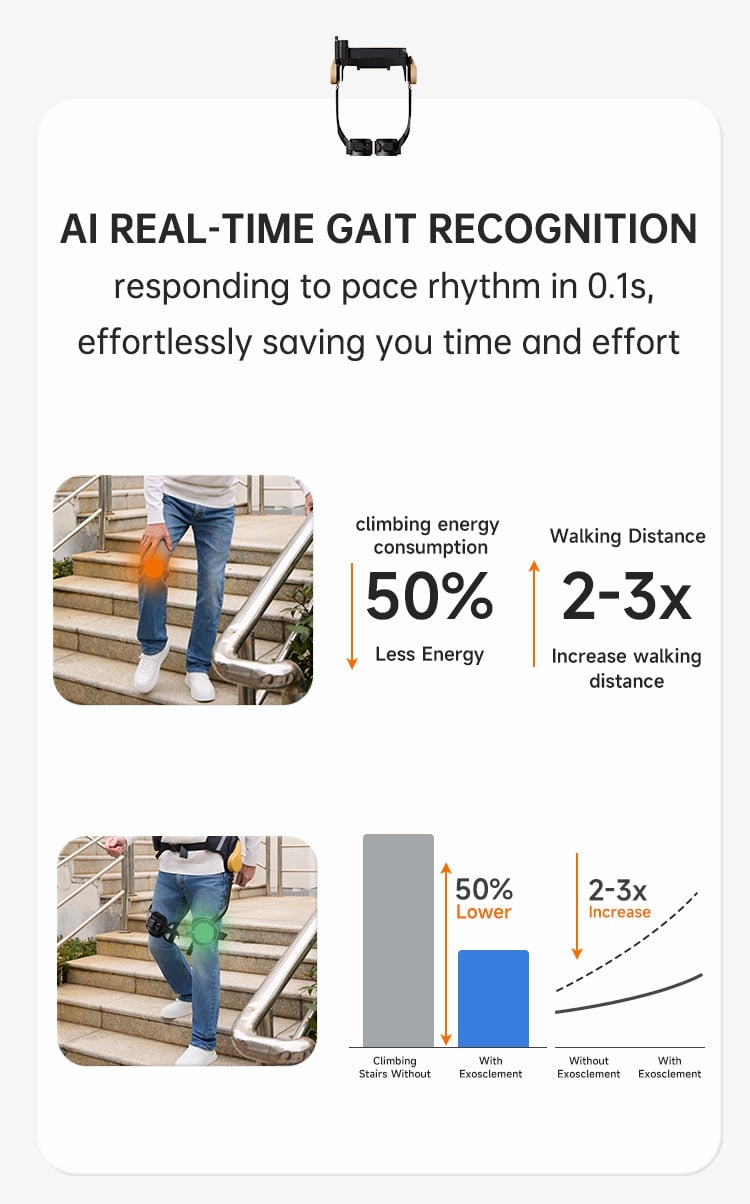
For home stairs, community centers, and outdoor steps, this exoskeleton provides stable and adaptive power assistance, making it safer and easier to climb up and down. Intelligent flexible algorithm, there will be no braking during wearing, and the assistance force will be adjusted in a timely manner according to your gait, so even when going up and down stairs, you won't fall. Its 6-level intelligent adjustment can automatically match step height and pace, providing smooth biomechanical support. The flexible design allows users to have complete control, greatly reducing the risk of falls while relieving pressure on the knees and joints. With its lightweight 2.0kg structure, it can maintain comfort even when repeatedly using stairs, helping elderly people maintain independence and confidence in daily life.
2. Park Walking & Outdoor Strolls
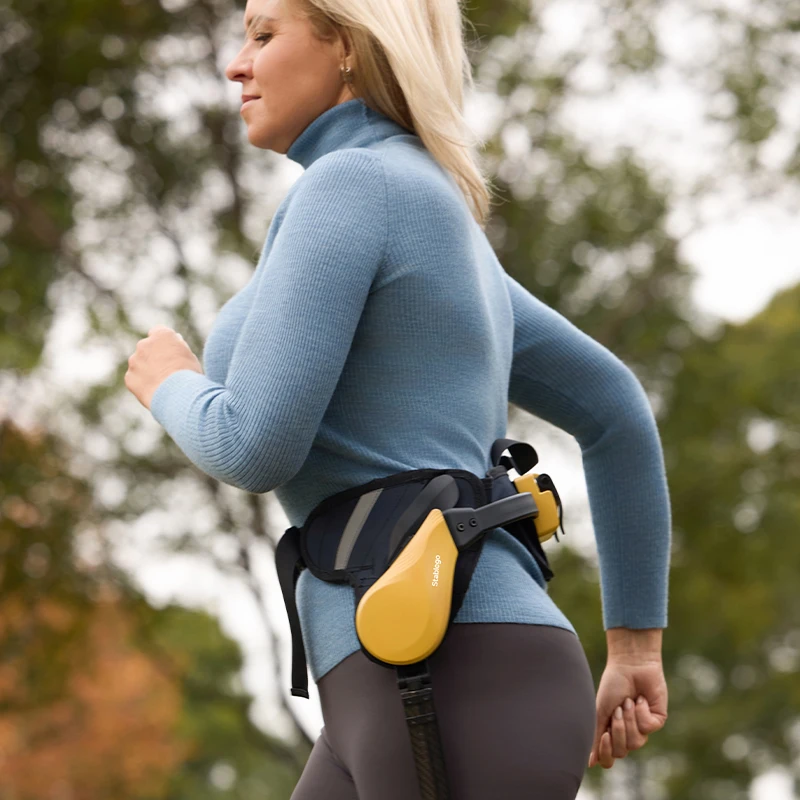
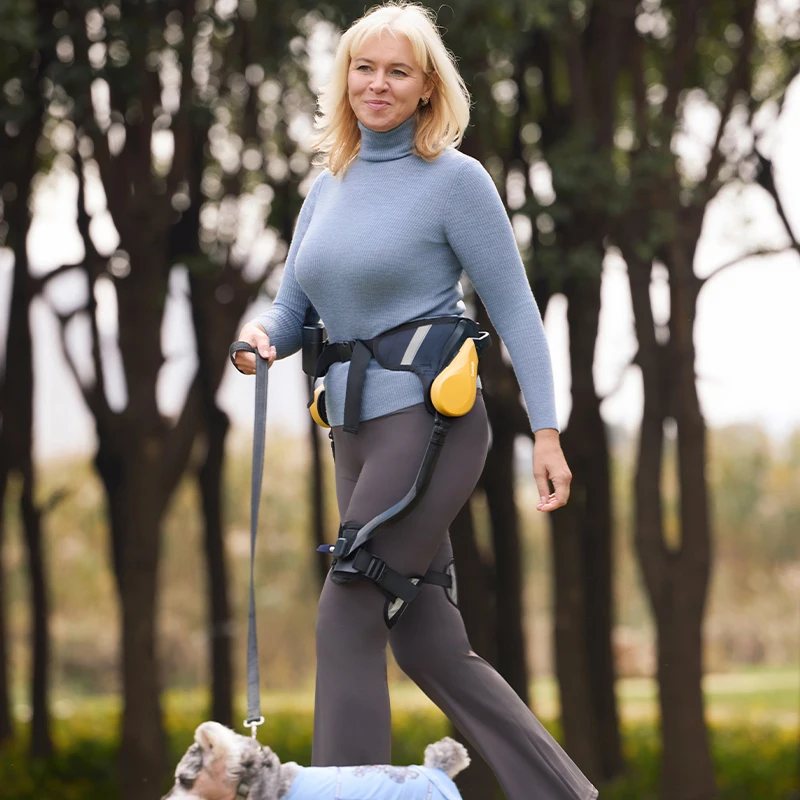
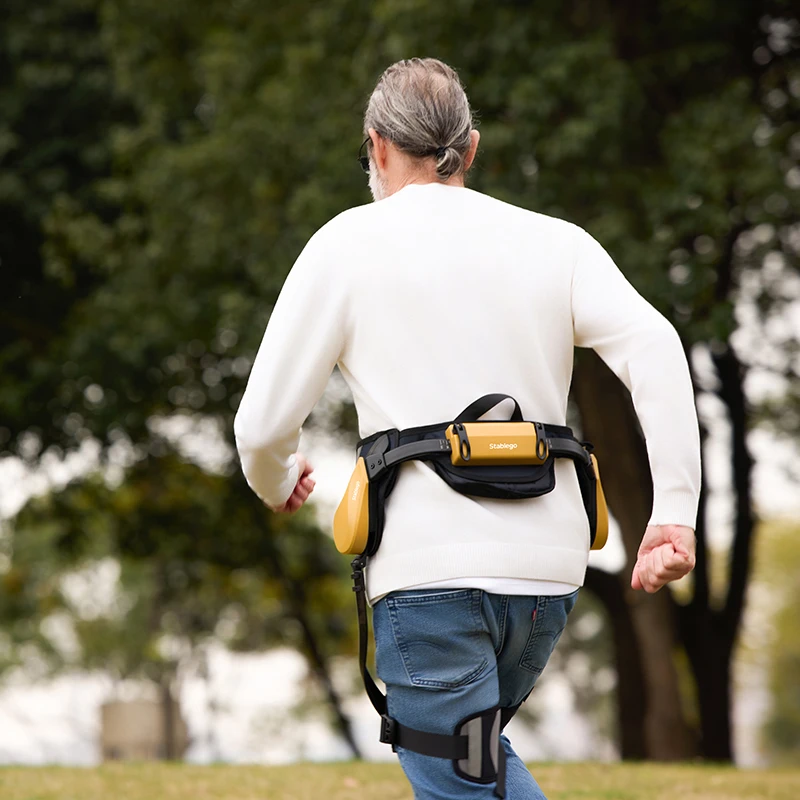
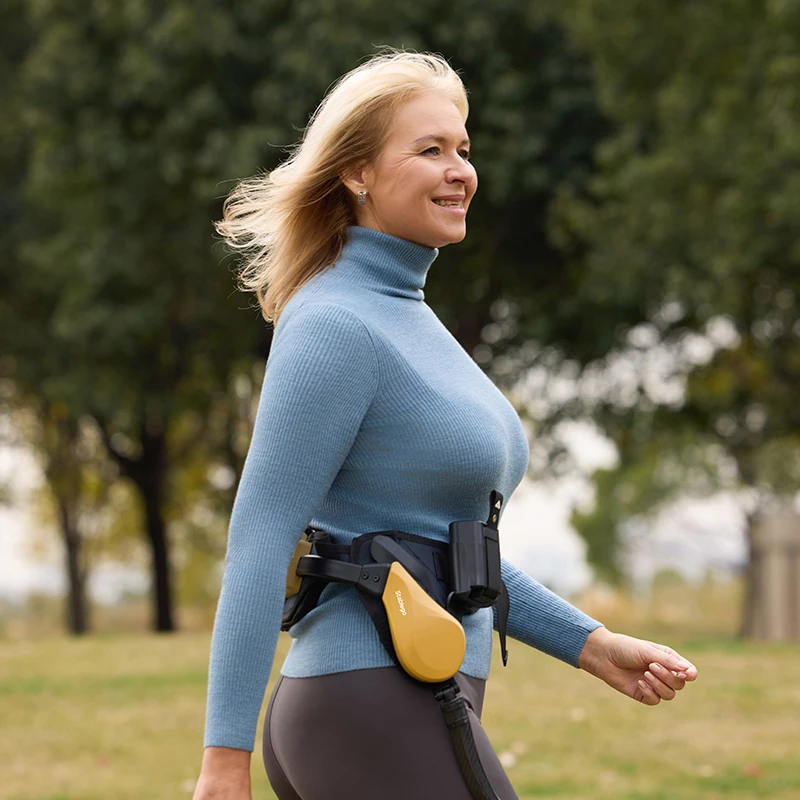
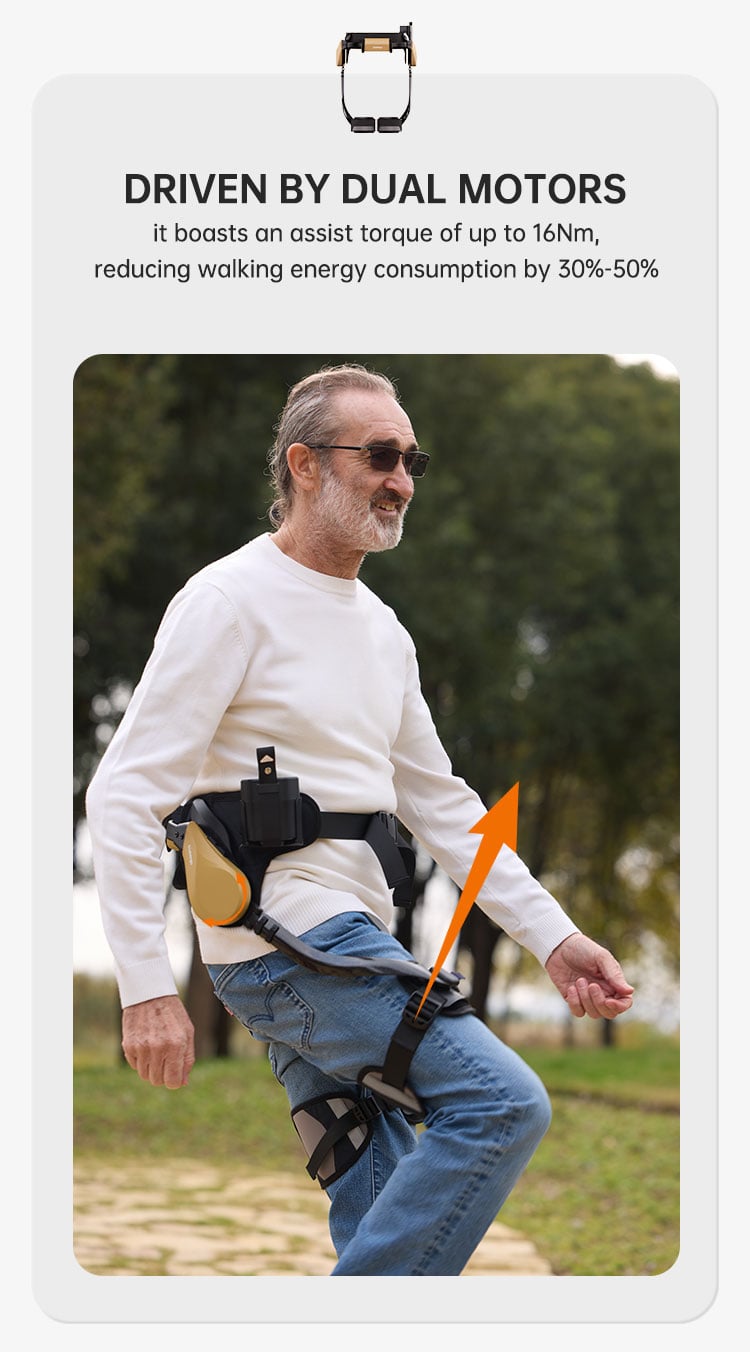
Ideal for park walks, neighborhood strolls and light outdoor activities, this exoskeleton brings natural, fatigue-free movement for extended periods. The IP54 waterproof and dustproof structure performs reliably on paths, grass and mild uneven ground. Its breathable composite fabric and ergonomic fit ensure all-day comfort with no foreign sensation. By reducing knee strain and stabilizing gait, it allows users to walk longer and enjoy outdoor time freely. Lightweight and portable, it blends into daily life like regular clothing — perfect for active seniors who value mobility and dignity.
3. Industrial Lifting & Work Support
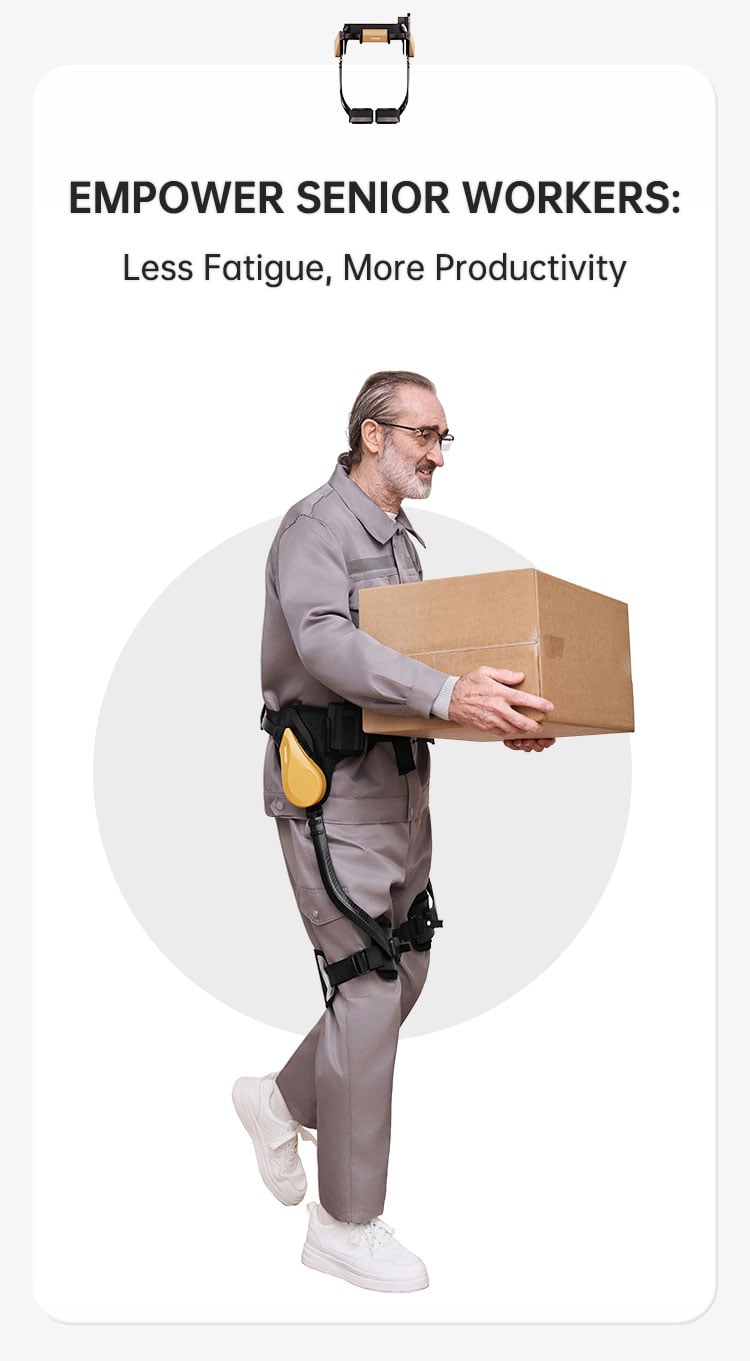
Designed for industrial lifting, material handling and long-hour standing tasks, this exoskeleton significantly reduces muscle fatigue and lower-body stress for workers. The high-torque motor provides consistent power assistance to ease lifting strain and protect knees, waists and joints during repetitive operations. Its adaptive smart adjustment aligns with natural body movement, improving efficiency while lowering injury risks. Durable, ergonomic and easy to wear in 30 seconds, it boosts workplace safety and productivity. CE-certified and built for daily industrial use, it offers a cost-effective solution for factories, logistics and warehousing businesses.

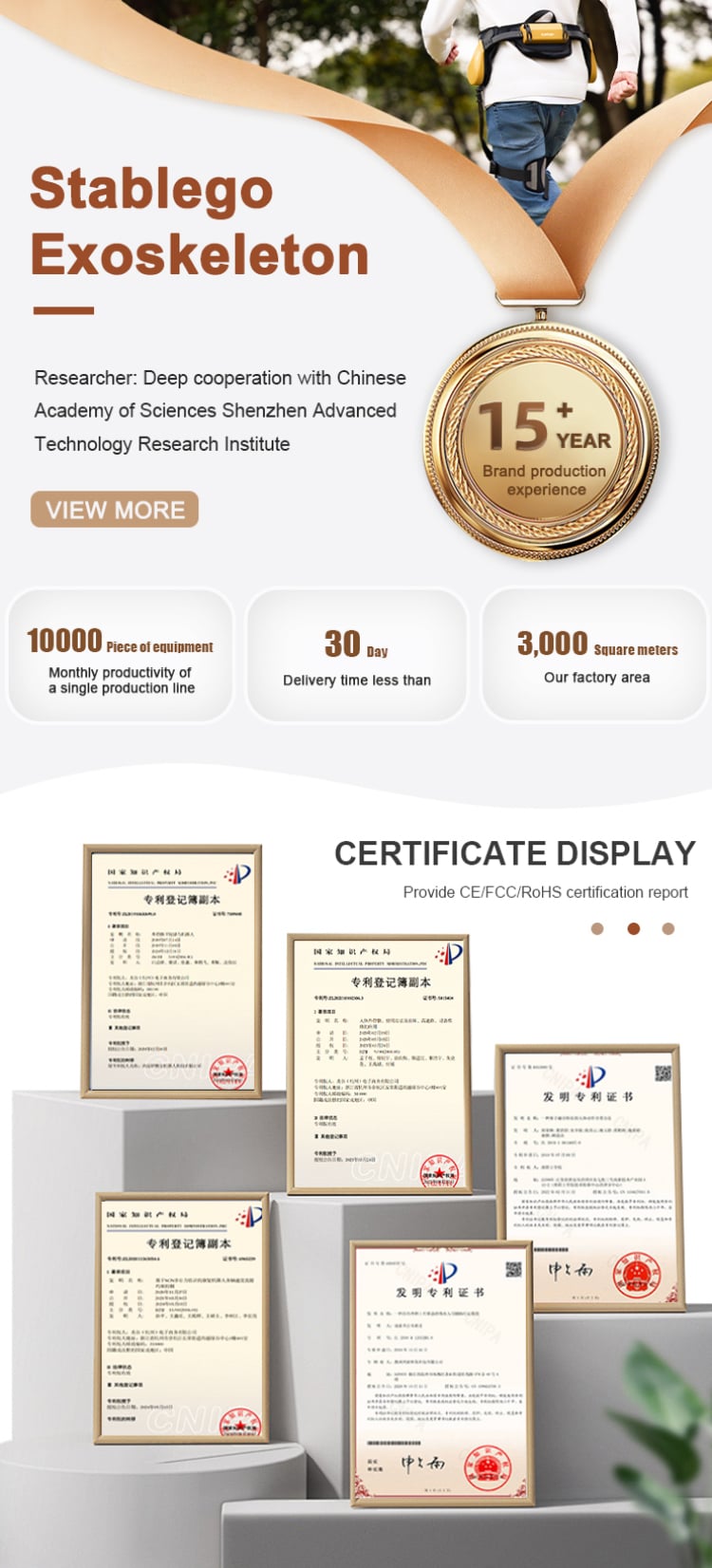
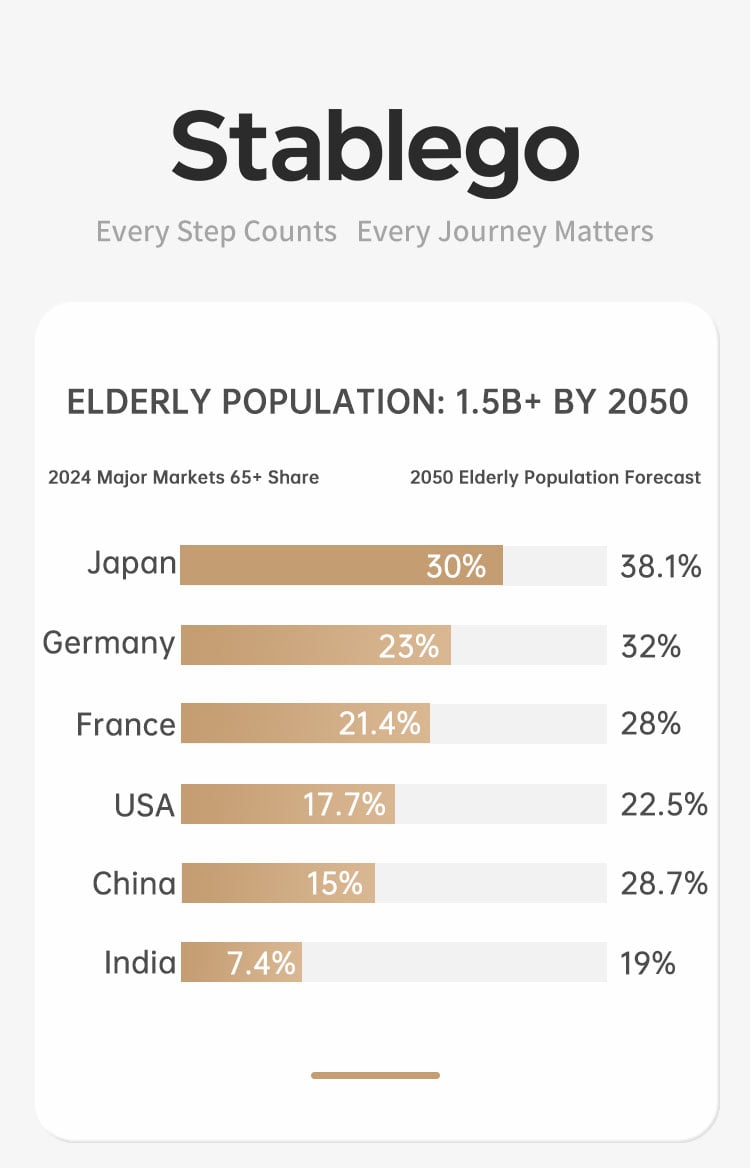
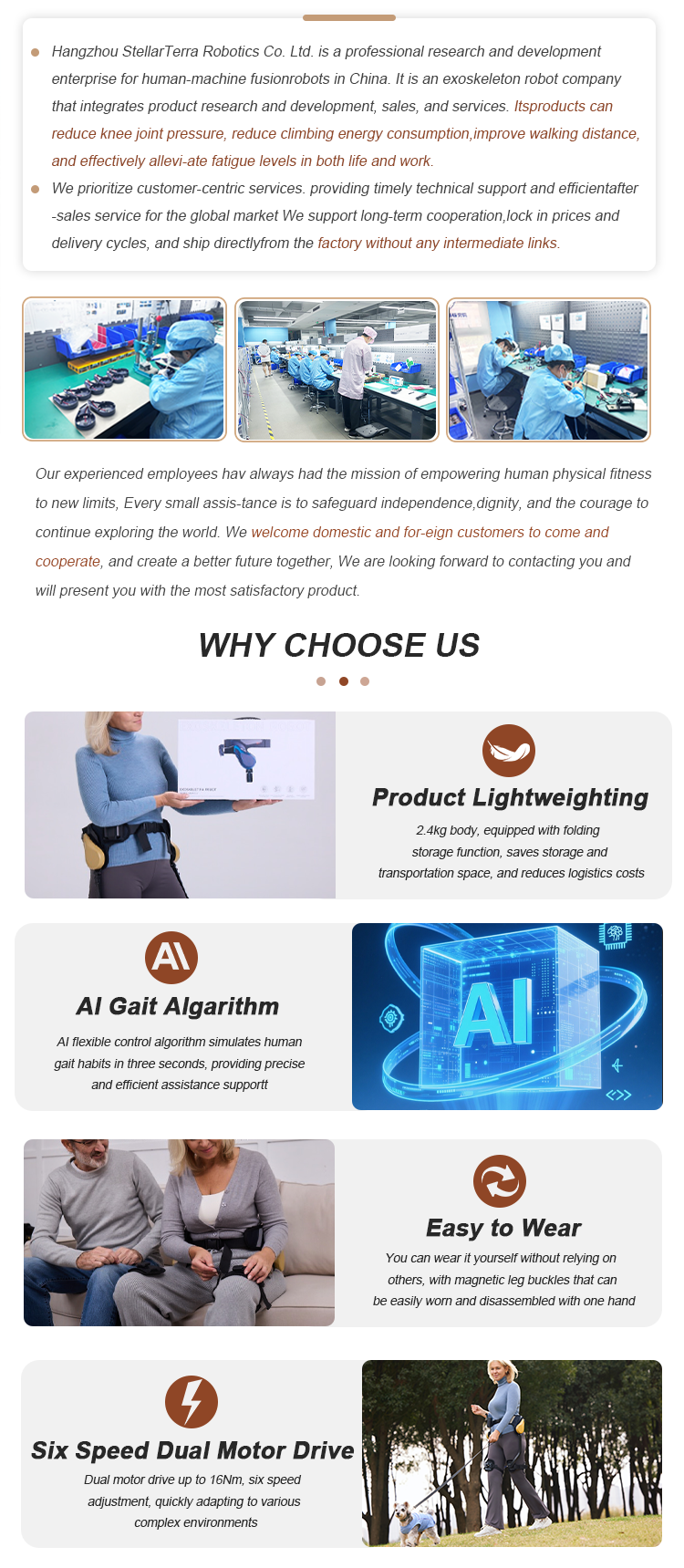
As an integrated company integrating R&D, sales, and services, we focus on lightweight exoskeleton robots designed to reduce knee joint pressure, lower energy consumption during climbing, and extend walking distance for the elderly.
Copyright © Hangzhou StellarTerra Robotics Co., Ltd. All Rights Reserved Privacy Policy